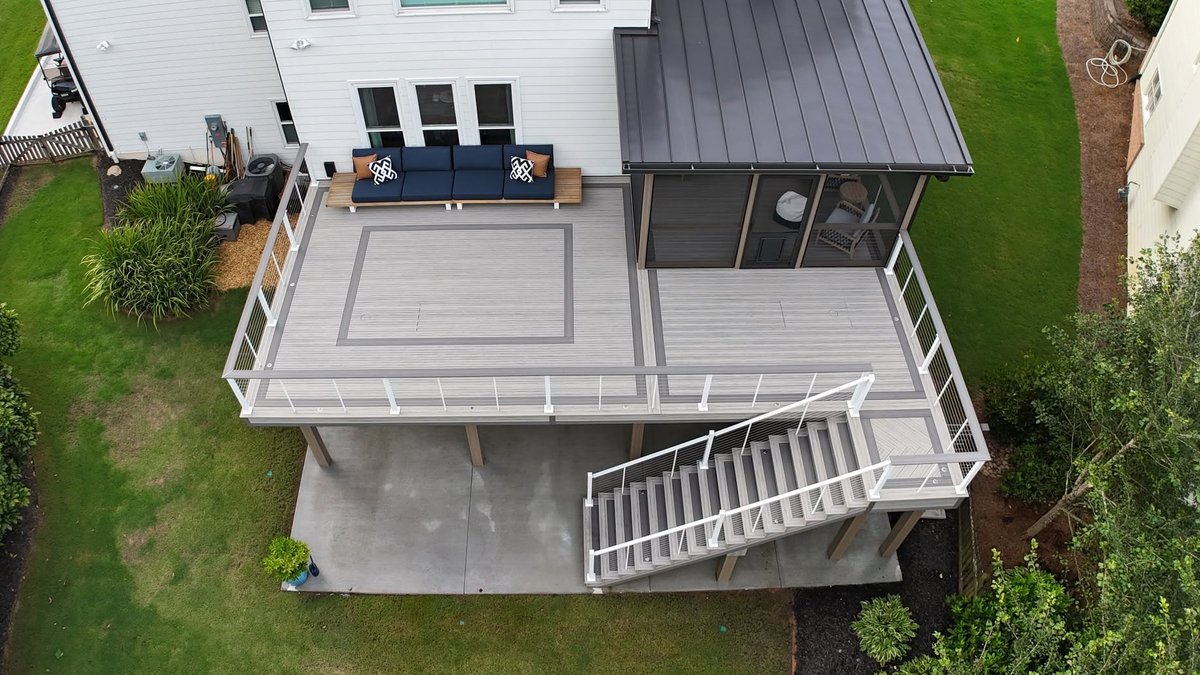
Homeowners often call an outdoor contractor assuming they know exactly what they need, such as a 16 × 20 ft deck with a covered porch and a grill space. Derek Kirchner warns that simply following those requests can be a mistake.
Consultation over Blueprint
Kirchner, owner of Kirchner Customs in the Atlanta area, treats his first visit as a consultation. He asks about family size, pets, entertainment habits and hobbies before discussing dimensions or materials.
“Armed with this information, I can say, ‘You could benefit from this feature, this functionality,’” he explains, aiming to uncover needs homeowners may not have recognized.
He also probes how the space might change over five or ten years. This forward-looking dialogue helps shape designs that remain useful as families evolve.
Custom Features in Action
On one job, the family loved playing cornhole. Kirchner considered using leftover decking for a simple set, but an employee spotted photos of recessed boards that could tilt up for play.
The crew obtained 3D plans from the original builder, fabricated a custom aluminum frame beneath the deck, notched the framing, and cut the decking so the boards sit flush when lowered. Integrated lighting now illuminates the area at night.
In another project, an older couple wanted to stay in their home, and the wife was passionate about birds. Kirchner collaborated with the husband to surprise her with custom birdhouses.
He researched the preferred species, learned each requires specific opening sizes, floor areas and entrance heights. The houses, built from composite material matching the deck, were spaced to reduce territorial conflicts and featured hinged roofs for easy cleaning.
Kirchner also advises when a client proposes an outdoor rug to define a dining area. He points out that a rug can trap moisture, leading to rot. Instead, he creates a herringbone inlay bordered by a picture-frame pattern, adding modest labor without significantly raising cost.
Kirchner’s projects typically range from $60,000–$80,000. He encourages owners to consider needs 10, 20 or 30 years ahead, such as extra entertainment space for growing children or a future roof addition.
When a homeowner cannot afford a roof now but may want one later, Kirchner sizes footings, posts and beams to support that future structure, avoiding costly retrofits.
Material choices are a central part of the conversation. For families with children, slip resistance is key, especially on stairs and wet decks. Kirchner favors Deckorators composite decking, saying “They by far have the most slip-resistant materials out there.”
He also stresses longevity below the deck. The framing uses marine-grade pressure-treated lumber, joist and beam tops receive flashing tape, extra flashing seals the deck-to-house junction, and structural screws replace nails.
“I don’t want to put a 25-year product on top of a 10-year frame,” he says, emphasizing the need for a durable substrate.
When upgrading from wood to composite decking, Kirchner prepares a cost-benefit analysis. He compares the higher upfront price with the recurring expense of staining wood every three to five years. “The numbers show that the costs break even after the first stain,” he notes.
Contractors who grasp how customers live can propose layouts that solve problems owners hadn’t imagined. Explaining the reasoning behind each recommendation increases the likelihood of acceptance.
Clients who value this level of customization often recognize its worth, allowing Kirchner to pursue more distinctive and profitable projects.
The overarching goal is to listen, identify hidden challenges, and suggest solutions. Rather than merely building what a homeowner asks for, contractors should discover how clients want to live and design spaces that truly support that lifestyle.
For more information, please visit kirchnercustoms.com.