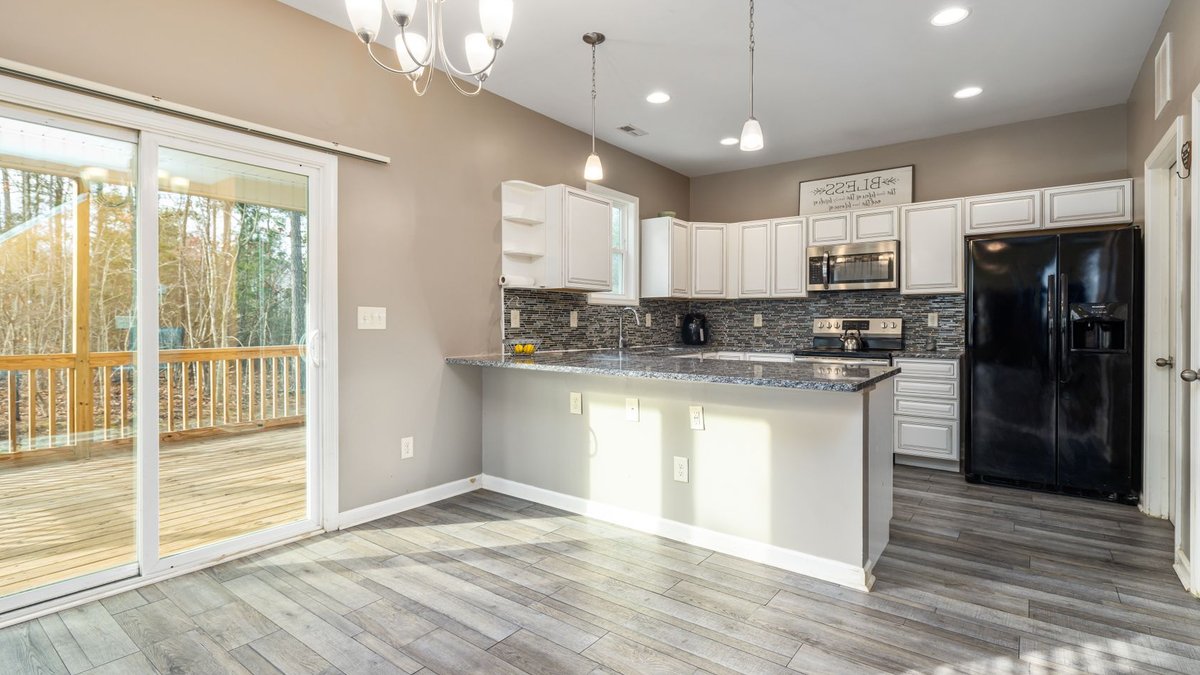
Headers for large glass doors are considered “deflection-critical” structural members, requiring special design considerations. A sliding glass door that is difficult to open or inoperable may need a contractor to investigate and repair, which can be frustrating for homeowners. The issue may recur within a couple of years if the repairs don’t address the root cause.
Header Design Considerations
Problems with sliding glass doors often arise from underlying structural issues rather than simple wear and tear. Common culprits include neglected upkeep, shifts in the framing dimensions over time, and bending in the header beam. To assess how header sag affects long-term functionality, it’s important to analyze three key factors: how design loads interact with the header, natural variations in wood quality, and how moisture levels at installation influence bending over time.
Design Considerations
When planning large glazed openings, header design is just one piece of the puzzle. Top-hung folding doors, especially, demand much stiffer support beams than standard sliding glass doors. For a recent project featuring a sliding glass door leading to a spacious deck, builders opted for a dropped header to bear both roof and ceiling loads.
The design specs include a clear-span, 36-foot roof trusses with 2-foot overhangs, a roof live load of 20 psf, and a roof ceiling assembly dead load of 20 psf. Based on these specs, a 6-foot, two-ply header is selected. The first step is to determine the header size required for a 6-foot dropped header, using the 2024 International Residential Code (IRC) Table R602.7(1) or the Wood Frame Construction Manual (WFCM).
The WFCM Table 3.22A1 outlines allowable spans for No. 2 Grade Douglas fir-larch, hem-fir, southern pine, and spruce-pine-fir lumber under a 20 psf dead load and a live-load deflection limit of L/240. According to this table, a double-layer 2×12 header would suffice for a 6-foot dropped header, ensuring live-load deflection stays under 0.3 inch.
Most major sliding glass door manufacturers specify rough openings that are approximately door-frame-width plus 1/2 inch and door-frame-height plus 1/2 inch. If the header deflects more than 1/2 inch, it can impinge on the function of the door. The deflection of a header designed in accordance with IRC and WFCM may exceed this recommended vertical clearance space if the impact of design dead loads is considered.
Deflection and Design Loads
To determine an allowable header span, both the IRC and WFCM call for a strength check and a live-load deflection check. The live-load deflection check uses a formula that calculates the deflection based on the loading, Modulus of Elasticity, and moment of inertia. The role of live-load deflection is critical, as short-term loading or transient live loads can affect the header’s performance.
Dead Load Deflection Impact
The impact of dead loads on deflection is also significant, as they are sustained loads imposed by the static weight of materials used in structural and nonstructural building components.
Related Post: Virginia homeowner cools cathedral ceiling with vented roof panels
In the case of a 6-foot sliding door header, the designer can specify one size deeper than given in the IRC or WFCM header design tables to compensate for “E” being below the grade average. The framing contractor can also use a hand-held meter to test the moisture content of the individual pieces of lumber used for the header to ensure it is below 19%. Without these measures, satisfactory header performance is a matter of chance.
A structural engineer emphasizes that top-hung folding doors need significantly stiffer headers than conventional sliding doors, with some manufacturers advising live-load deflection limits as strict as L/720. The header’s structural design must strictly follow the manufacturer’s published guidelines for the specific door system.
Minimizing Header Sag Strategies
Three strategies can help minimize excessive header sag: using a beam one size thicker than required by code, selecting a higher stiffness grade than the standard 1.3 E assumed in IRC and WFCM tables, or testing lumber moisture content with a handheld meter.
Among these options, upgrading to a thicker beam is the most straightforward solution, as it accounts for potential variations in lumber stiffness below published averages. Alternatively, using structural composite lumber (SCL) headers designed per manufacturer specifications and adhering to door installation tolerances provides a dependable alternative for large glass door headers.
For all headers over large glass doors, there should be close coordination between the header designer and the framer on where the header will be located in the wall, as this condition critically determines a header’s deflection potential. If a builder assumes a raised header with a braced compression edge but does not apply the appropriate IRC reduction, the header span could be longer than appropriate, resulting in greater header deflection.
According to the 2024 National Design Specification (NDS) for Wood Construction, Section 3.5.2 Long-Term Loading, increasing member size is one way to provide extra stiffness to allow for time-dependent deformation. The NDS also references the 1.5 and 2.0 time-dependent creep deflection factors used in this article. The case study header demonstrates the uncertainties of header stiffness and moisture content at the time of installation, highlighting the need for careful design and construction.
The “Variability of E” graph shows the range of possible E values for different header designs, with the Red curve representing a 1-ply header and the Green curve representing a 2-ply header. The Blue curve represents a 3.5-inch-thick SCL header. The graph illustrates the impact of E variability on header deflection, with the range of possible E values affecting the likely lowest header E and initial dead load deflection.