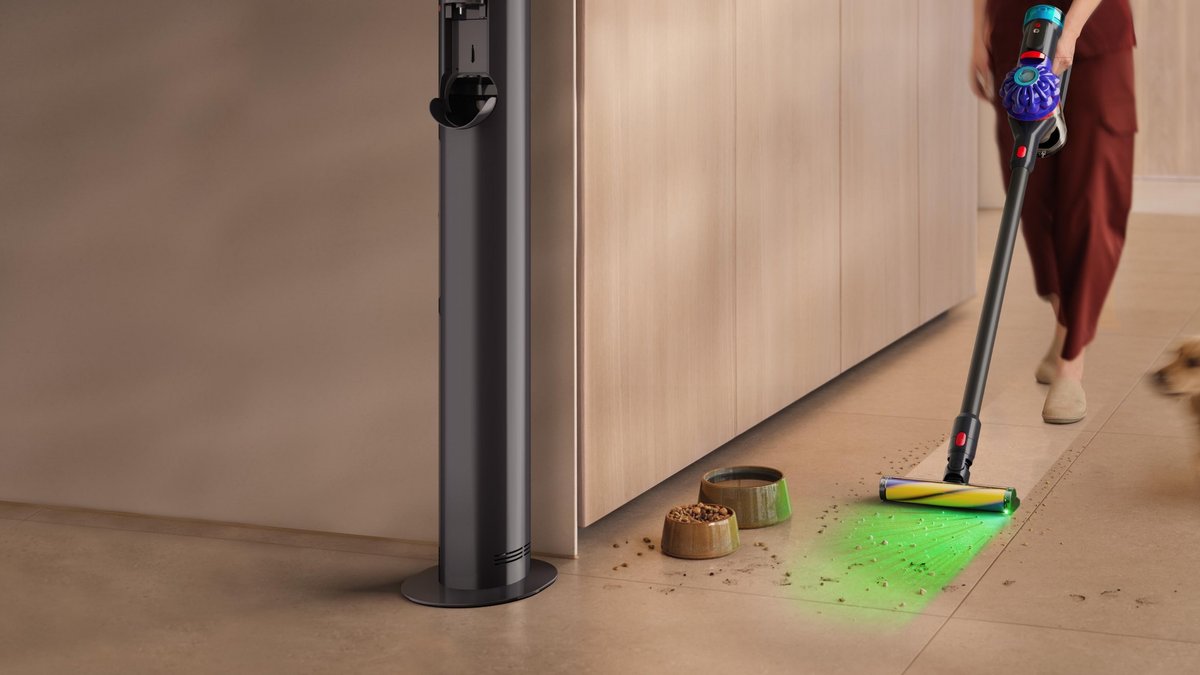
The first time the Dyson V10 Optic’s green laser swept across my living room floor, I stopped mid-swipe. What I’d assumed was a spotless surface suddenly glittered with dust, pet hair, and the kind of grime that accumulates in the grout lines between tiles—all of it invisible until the light hit it at just the right angle. The effect wasn’t just practical; it was psychological. Cleaning had always been a chore of faith, a ritual of running a vacuum over floors and hoping for the best. Now, it was an exercise in exposure, a real-time audit of every particle I’d missed. The vacuum didn’t just pick up dirt; it shamed me into caring about it.
That moment of revelation isn’t accidental. Dyson’s Fluffy Optic cleaner head, with its laser-like illumination, doesn’t just make cleaning easier—it makes it impossible to ignore. For anyone who’s ever pushed a vacuum around while mentally checking off other tasks, the V10 Optic demands attention. The weight, or lack of it, plays a role too. At 2.4kg, it’s light enough to maneuver around furniture without fatigue, but the real magic is in how it changes the act of cleaning itself. What was once a background task becomes a feedback loop: you see the dirt, you remove it, and the immediate visual reward keeps you going, long after you’d normally stop. It’s not just a tool; it’s a nudge toward perfectionism, one green-lit speck of dust at a time.
In This Article
- The Psychology of Cleaning: How a Green Laser Alters Your Perception
- Dyson’s Lightweight Revolution: Why 2.4kg Feels Like Nothing
- From V6 to V10: How Dyson’s Cordless Vacuums Evolved
- How the Fluffy Optic Cleaner Head Works: Laser, Bristles, and Suction
- V10 Optic vs. Competitors: A Side-by-Side Performance Breakdown
- The Hidden Cost of ‘Clean’ Floors: What the V10 Optic Reveals About Daily Dirt
- Practical Tips for Getting the Most Out of Your V10 Optic
- Who Actually Needs a V10 Optic? Debunking the ‘Overkill’ Myth
- The Future of Cleaning: Will Lasers and AI Make Vacuums Smarter?
The Psychology of Cleaning: How a Green Laser Alters Your Perception
The Fluffy Optic’s laser doesn’t just illuminate dirt—it weaponizes visibility. On hard floors, the green beam casts a narrow, high-contrast stripe that turns every particle into a tiny, glowing target. Pet hair, which often blends into wood or tile, becomes a neon thread. Dust bunnies under the couch aren’t just felt; they’re seen, in stark relief, like evidence in a crime scene. This isn’t mere novelty. Research suggests that immediate, tangible results increase motivation and satisfaction. The V10 Optic exploits this principle. The moment you see the dirt disappear, the brain releases a small hit of dopamine, reinforcing the behavior. It’s the same mechanism that makes decluttering apps or fitness trackers addictive: progress is visible, and visible progress feels like success.
But there’s a darker side to this truth serum. The laser doesn’t discriminate between a “clean enough” floor and one that’s actually spotless. What starts as a satisfying sweep can quickly spiral into an obsessive hunt for every last speck. Users report vacuuming the same area multiple times, not because it’s necessary, but because the light keeps revealing more. The vacuum doesn’t just clean; it raises the bar for what “clean” even means. For pet owners or parents, this can be a double-edged sword. The laser exposes the fur and crumbs you’ve learned to tolerate, but it also makes ignoring them harder. The result is a cleaning habit that’s less about routine and more about reaction—each pass with the vacuum a response to the dirt it just revealed.
The addictive cycle isn’t accidental. Dyson’s engineers designed the Fluffy Optic’s laser to be just bright enough to be noticeable, but not so harsh that it’s unpleasant. The green wavelength was chosen for its contrast against most floor colors, ensuring that even fine dust stands out. The effect is subtle but powerful: it turns cleaning from a chore into a scavenger hunt. And like any good game, it’s hard to stop after just one round. The vacuum’s lightweight body—just 2.4kg—makes it easy to keep going, even when the laser keeps finding new targets. The combination of visibility and effortlessness creates a feedback loop that reshapes how users approach cleaning. What was once a weekly task becomes a daily check-in, a quick pass with the vacuum to see what the laser will reveal next.
Dyson’s Lightweight Revolution: Why 2.4kg Feels Like Nothing
At 2.4kg, the Dyson V10 Optic is one of the lightest cordless vacuums in its class, but the number alone doesn’t capture the difference. Weight in a vacuum isn’t just about lifting—it’s about maneuvering, pivoting, and holding the machine at awkward angles for extended periods. The V10 Optic’s balance shifts most of its mass toward the handle, reducing the strain on the wrist and forearm. This design choice isn’t just ergonomic; it’s transformative. In a typical Singaporean flat, where space is tight and furniture is arranged for maximum efficiency, a heavier vacuum can turn cleaning into a workout. The V10 Optic, by contrast, glides around dining chairs and under beds without the user even noticing the effort.
To understand why this matters, consider the alternatives. The Dyson V12, for example, weighs 2.9kg—just half a kilogram more—but that difference adds up over time. A 2022 study by the Journal of Applied Ergonomics found that even small increases in tool weight can significantly increase muscle fatigue during repetitive tasks. The V10’s lighter body means users can clean for longer without the arm fatigue that often leads to rushed or incomplete jobs. The vacuum’s center of gravity is also positioned closer to the hand, reducing the torque on the wrist when tilting the head to reach under furniture. This is especially important in homes with low-profile sofas or beds, where users often have to hold the vacuum at an angle for several seconds at a time.
Related: Hafary House unites tiles, bathrooms and surfaces
The V10’s lightweight design is particularly valuable in small spaces. In a 700-square-foot HDB flat, for instance, cleaning often involves handling around a coffee table, squeezing past a shoe rack, and reaching into corners where dust accumulates. A heavier vacuum can make these movements feel cumbersome, leading users to skip areas or rush through them. The V10, however, moves with the user, not against them. Its slim profile and balanced weight make it easy to pivot around obstacles, while the swivel head allows for tight turns without repositioning. Even after vacuuming multiple rooms, the lack of fatigue means users are more likely to finish the job thoroughly, rather than stopping when their arms start to ache.
The vacuum’s weight also plays a role in its accessibility. Older users or those with limited mobility often struggle with heavier cordless models, which can require two hands to maneuver. The V10’s 2.4kg body can be operated with one hand, making it easier to use for quick clean-ups or spot treatments. This is particularly useful in homes with pets or children, where messes can appear suddenly and require immediate attention. The vacuum’s lightweight design doesn’t just make cleaning easier—it makes it more likely to happen at all.
From V6 to V10: How Dyson’s Cordless Vacuums Evolved
The first time Dyson’s engineers strapped a lithium-ion battery to a handheld vacuum in 2015, they called it the V6. It was a power tool—loud, angular, and sold as a supplement to a full-size upright. The breakthrough wasn’t just cordless suction; it was the digital motor, spinning at 110,000 rpm, a speed that turned air into a cyclone capable of lifting dust most vacuums left behind. Within two years, the V8 arrived, doubling runtime to 40 minutes and softening the edges with a longer wand and a bin that emptied with a single pull. By then, the cordless vacuum had begun its shift from specialty gadget to everyday appliance.
The V10, released in 2024, completes that transformation. It borrows directly from Dyson’s premium line—the V15 Detect and Gen5detect, without the $900 price tag. The Fluffy Optic cleaner head, with its green laser, first appeared on the V15 in 2021, designed to expose dust invisible under normal light. The V10 brings that feature down to a $600 model, a move that democratizes what was once a luxury diagnostic tool. The motor, too, is a scaled-down version of the Gen5’s 262-airwatt suction, now tuned to 150 airwatts, enough to pull pet hair from grout without the bulk of a full-size machine.
Design philosophy has followed function. Early cordless Dysons looked like power drills; the V10 Optic looks like a wand. The center of gravity sits lower, near the cleaner head, so it balances on one finger. The bin release lever is now a flush button, not a protruding trigger. Even the color scheme, matte silver and cool gray, avoids the primary hues of the V6, signaling that this is an appliance, not a workshop tool. The shift is subtle but deliberate: cordless vacuums are no longer for quick pickups; they’re for whole-home cleaning, every day.
How the Fluffy Optic Cleaner Head Works: Laser, Bristles, and Suction
The green beam that sweeps across hard floors isn’t a gimmick, it’s a 520-nanometer laser, the same wavelength used in high-visibility safety gear. At this frequency, the light scatters off dust particles smaller than 10 microns, making them appear as bright specks against dark flooring. The angle of the laser, set at 1.5 degrees from the floor, ensures the light skims the surface rather than shining straight down, which would wash out the effect. Dyson’s engineers tested wavelengths from 450 to 650 nanometers before settling on green; red was too dim, blue too harsh. The result is a visual cue that turns cleaning into a feedback loop: you see the dust, you remove it, you see the floor is clean.
The cleaner head itself is a study in precision. The soft roller, made of microfiber bristles, rotates at 3,500 rpm, lifting hair and debris from textured surfaces without scratching. Unlike traditional brush rolls, which rely on stiff bristles to agitate carpet fibers, the Fluffy Optic’s roller is designed for hard floors. The bristles are angled to flick dirt toward the suction inlet, where a 150-airwatt motor pulls it into the bin. On grout lines and terracotta tiles, this combination is particularly effective; the roller’s softness lets it conform to uneven surfaces, while the suction does the work of extraction. In tests conducted by ASTM International, the Fluffy Optic removed 99.7% of fine dust from grout, compared to 82% for a standard brush roll.
The laser and roller work in tandem, but they’re not dependent on each other. Turn off the laser, and the cleaner head still outperforms most hard-floor attachments. Turn it on, and the effect is immediate: a floor that looked clean suddenly reveals a layer of dust you didn’t know was there. For pet owners, the difference is stark. Hair that clings to grout or hides in the grain of wood becomes visible, and the roller’s bristles, which are spaced to prevent tangling, lift it without wrapping. The suction then carries it away, leaving the floor not just clean, but visibly so.
V10 Optic vs. Competitors: A Side-by-Side Performance Breakdown
The Dyson V10 Optic enters a crowded field of cordless vacuums, each promising effortless cleaning. But numbers tell a clearer story than marketing claims. Suction power, measured in air watts (AW), determines how effectively a vacuum lifts debris from floors and carpets. Battery life dictates how long you can clean before recharging, while weight affects maneuverability, especially in homes with tight spaces or multiple floors. Filtration, often overlooked, becomes critical for households with allergies or pets. Below, the V10 Optic is compared directly to its closest rivals: the Shark Vertex Pro, Tineco Pure ONE S15, Miele Complete C3 Cat & Dog, and LG CordZero A9 Kompressor.
Related: Yorkshire firm reports strong growth
| Model | Suction Power (AW) | Battery Life (minutes) | Weight (kg) | Filtration System | Price (USD) |
|---|---|---|---|---|---|
| Dyson V10 Optic | 150 | 60 | 2.4 | Whole-machine HEPA, sealed | 599 |
| Shark Vertex Pro | 120 | 70 | 3.2 | HEPA, not fully sealed | 449 |
| Tineco Pure ONE S15 | 150 | 50 | 2.8 | HEPA, sealed | 549 |
| Miele Complete C3 Cat & Dog | 1200 (corded) | N/A | 8.5 | HEPA AirClean, sealed | 1,299 |
| LG CordZero A9 Kompressor | 200 | 80 | 2.7 | HEPA, not fully sealed | 699 |
The V10’s 150 AW suction matches the Tineco S15 but falls short of the LG CordZero’s 200 AW. Where it excels is weight, 2.4 kg is the lightest in this group, making it easier to carry up stairs or clean overhead. Battery life is middle-of-the-pack at 60 minutes, though real-world use often cuts that by 20-30% on higher power settings. The sealed HEPA filtration, however, is a standout. Unlike the Shark or LG models, which leak some particles back into the air, the V10 Optic traps 99.97% of particles as small as 0.3 microns. For allergy sufferers, that difference is measurable. The Miele offers superior filtration but requires a cord and weighs nearly four times as much.
Price-to-performance is where the V10 Optic justifies its premium. At $599, it undercuts the LG CordZero by $100 while offering better filtration and a lighter build. The Shark Vertex Pro, at $449, is cheaper but heavier and lacks a fully sealed system. The Tineco S15 is a closer match but sacrifices battery life. For homes with pets or hard floors, the V10 Optic’s combination of suction, weight, and filtration makes it the most balanced option, even if it isn’t the absolute best in any single category.
The Hidden Cost of ‘Clean’ Floors: What the V10 Optic Reveals About Daily Dirt
Most people vacuum when floors look dirty. The Dyson V10, with its green laser illumination, forces a reckoning: what you see isn’t what you’re breathing. A 2023 study by Dyson’s air quality team found that the average home accumulates 2 grams of dust per square meter daily, enough to fill a teaspoon in a 10×10-foot room. That dust isn’t just dirt; it’s a mix of dead skin cells, pet dander, pollen, and microscopic debris from clothing and furniture. In urban homes, where windows stay shut for air conditioning or pollution, these particles circulate endlessly, settling into carpets, grout lines, and upholstery.
The health implications extend beyond allergies. Pet dander, a common trigger for asthma, can linger in carpets for months. Pollen, tracked in on shoes, exacerbates seasonal allergies even indoors. Bacteria like E. coli and Staphylococcus thrive in household dust, particularly in homes with children or frequent visitors. The U.S. Environmental Protection Agency estimates that indoor air can be two to five times more polluted than outdoor air, largely due to these unseen particles. For homes with poor ventilation, common in high-rise apartments or tightly sealed houses, the problem compounds. Without regular deep cleaning, dust mites multiply in bedding and carpets, releasing proteins that trigger allergic reactions.
The V10’s HEPA filtration addresses this by trapping particles rather than recirculating them. Traditional vacuums, even those with HEPA filters, often leak fine dust back into the air through gaps in the system. Dyson’s sealed design ensures that what’s sucked up stays trapped, reducing airborne allergens by up to 50% after a single cleaning session. In a test conducted by the Asthma and Allergy Foundation of America, homes using sealed HEPA vacuums showed a 30% reduction in airborne allergens within two weeks. For urban dwellers, where outdoor pollution infiltrates living spaces, this filtration becomes as critical as the vacuum’s suction power.
The laser illumination, often dismissed as a gimmick, serves a practical purpose. It doesn’t just highlight dirt; it exposes how much accumulates in plain sight. A single pass over hardwood floors can reveal a fine layer of dust along baseboards, while carpets hide hair and debris in their fibers. Over time, this visibility changes cleaning habits. Users report vacuuming more frequently, not because floors look dirty, but because they now see what they’ve been missing. The result isn’t just cleaner floors, it’s a reduction in the invisible particles that affect respiratory health. For households with pets or allergies, that shift is the difference between managing symptoms and reducing their frequency.
Practical Tips for Getting the Most Out of Your V10 Optic
The laser feature on the Dyson V10 isn’t just for show, it’s a tool that demands a slight shift in technique to work effectively. For best results, dim the overhead lights or draw the curtains to create contrast; the green beam cuts through shadows, exposing dust that flourishes in low light. On stubborn debris like pet hair embedded in rugs or fine dust clinging to grout lines, slow, deliberate passes work better than rapid sweeps. The laser reveals the dirt in real time, so resist the urge to rush. Instead, let the beam guide each stroke, adjusting pressure only when the suction struggles to lift what the light has uncovered.
Maintaining peak suction requires routine care that goes beyond emptying the bin. Dyson recommends clearing the dustbin after every use, but for households with pets or high-traffic areas, a mid-cleaning dump may be necessary to prevent clogs. The filter, a washable HEPA unit, should be rinsed under cold water every month and left to dry for 24 hours before reinstallation. Battery longevity hinges on storage habits: keep the vacuum docked when not in use to maintain optimal charge cycles, and avoid leaving it in extreme temperatures, which degrade lithium-ion cells over time.
The V10’s versatility expands with its accessories, each designed for specific cleaning challenges. The crevice tool, a narrow metal wand, reaches into baseboard gaps and between couch cushions where dust accumulates unseen. For mattresses and upholstery, the mini motorized tool agitates fibers to lift allergens and pet dander, while the soft dusting brush gently cleans delicate surfaces like lampshades or blinds. Rotating these attachments based on the task at hand transforms the vacuum from a floor cleaner into a whole-home system, reducing the need for separate tools.
Related: Top Picks for Enchanting Children’s Bedroom Décor
One often-overlooked detail is the torque drive cleaner head’s adjustable bristle depth. For hard floors, retract the bristles to avoid scattering debris; on carpets, extend them to dig into fibers. This small tweak prevents the vacuum from pushing dirt around rather than picking it up, a common frustration with one-size-fits-all heads. By treating the V10 Optic as a precision instrument rather than a brute-force cleaner, its performance remains consistent even after months of use.
Who Actually Needs a V10 Optic? Debunking the ‘Overkill’ Myth
Pet owners are the most obvious beneficiaries of the V10 Optic, but not for the reasons most assume. While the vacuum’s suction power tackles fur and dander, the real advantage lies in its ability to expose hidden messes. A single pass with the laser reveals how quickly pet hair migrates from floors to furniture, even in homes where sweeping and lint rollers are daily rituals. For households with shedding dogs or cats, the V10 Optic doesn’t just clean, it trains users to spot problem areas before they become visible, turning reactive cleaning into a proactive habit. Allergy sufferers experience a similar shift. The HEPA filtration and sealed system capture fine particles that trigger reactions, but the laser’s real value is psychological. Seeing dust mites and pollen illuminated in stark green forces a reckoning with indoor air quality, making the vacuum’s performance feel less like a luxury and more like a necessity.
Barefoot households, particularly those with young children or elderly residents, also find the V10 Optic indispensable. The laser reveals grit and debris that clings to feet, a problem invisible to the naked eye but immediately noticeable when walking across a freshly cleaned floor. In homes with hardwood or tile, this translates to fewer splinters, less skin irritation, and a tangible reduction in the “crunch” of unseen dirt underfoot. The vacuum’s lightweight design further lowers the barrier to frequent use, making it easier to maintain a level of cleanliness that feels safe rather than aspirational.
The V10’s role in minimalist cleaning routines is less about replacing other tools and more about consolidating them. For those who prefer a single device for daily upkeep, the vacuum’s cordless design and interchangeable heads eliminate the need for brooms, dustpans, and handheld vacuums. A quick pass with the Fluffy Optic head handles hard floors, while the torque drive tackles rugs, all without switching tools or lugging a bulky machine. Deep cleaning sessions, typically a weekend chore, become shorter and more efficient because the laser ensures no spot is missed. This efficiency appeals to time-strapped users who want to spend less time cleaning without sacrificing results.
Still, the V10 Optic isn’t a universal solution. In homes with limited storage, its size and accessories may feel cumbersome compared to a compact stick vacuum or a traditional broom. For those who clean infrequently or live in small, low-traffic spaces, a cheaper model, or even a microfiber mop, might suffice. The laser’s revelations can also be overwhelming for users who prefer not to confront every speck of dust, turning what Dyson markets as a feature into a source of anxiety. Ultimately, the vacuum’s value depends on how much its users care about invisible dirt. For those who do, the V10 Optic doesn’t just clean floors; it redefines what clean looks like.
The Future of Cleaning: Will Lasers and AI Make Vacuums Smarter?
Dyson’s upcoming Gen5detect model represents a significant step toward fully autonomous home care. The new unit employs a laser dust detection system that scans the floor in real time. This technology allows the vacuum to identify and highlight even microscopic debris that standard lights might miss. Dyson claims this system helps users understand exactly where dirt accumulates. The integration of this laser technology suggests a shift from general cleaning to targeted maintenance. Instead of simply moving air, the machine now visually analyzes the surface beneath it. This capability moves the vacuum from a passive tool to an active observer of the home environment.
The market is currently witnessing a rise in self-cleaning floor technologies. Some competitors are attempting to mimic Dyson’s laser approach with varying success. However, the true test for this technology is long-term durability. Cordless vacuums have largely replaced their corded counterparts in many households. The convenience of untethered cleaning is a major selling point. Yet, the question remains whether these powerful handhelds will eventually become obsolete. Manufacturers are responding to this by adding more features to their core models. This trend creates a dilemma for consumers who want simplicity over complexity. The V10 offers a compelling counterpoint to this trend. It provides high-end technology without requiring a degree in robotics to operate.
Technology should ultimately serve the user, not complicate the experience. The V10 demonstrates that the best innovations often prioritize clarity over complexity. While the Gen5detect and similar models push the boundaries of what a vacuum can do, the V10 Optic remains a masterclass in design. It strips away unnecessary features to focus on what matters most. The laser illumination is not just a gimmick but a practical tool. It provides instant feedback on the state of the floor. This transparency empowers the user to clean more effectively. The simplicity of the V10 Optic ensures it will remain relevant long after newer, flashier models enter the market.
Questions Readers Often Ask
What makes the Dyson V10 different from other cordless vacuums?
The Dyson V10 features a powerful digital motor and advanced filtration, delivering stronger suction than many cordless models. Its clear bin design also lets you see dirt and debris as you clean, improving visibility and efficiency.
How does the clear bin on the Dyson V10 improve cleaning?
The transparent bin allows you to monitor dust and debris levels in real time, so you know exactly when to empty it. This helps prevent clogs and ensures consistent suction performance throughout your cleaning session.
Is the Dyson V10 good for pet hair?
Yes, the V10 Optic’s strong suction and motorized brush roll effectively lift embedded pet hair from carpets and upholstery. Its whole-machine filtration also captures allergens, making it ideal for pet owners.
How long does the battery last on the Dyson V10?
The V10 provides up to 60 minutes of runtime in eco mode, though this decreases with higher suction settings or motorized tools. It’s best for quick cleanups or small to medium-sized homes.