Grace Kelly’s life unfolded across two distinct spheres: the dazzling world of Hollywood and the refined setting of European royalty. When she wed Prince Rainier III of Monaco in 1956, her relocation from a West Hollywood apartment to the Prince’s Palace in Monte Carlo marked a dramatic shift in her daily existence.
The adjustment proved challenging. “I had always lived in big cities,” she later noted. “I had also spent nearly 10 years acting – so it was quite a change from an actor’s life to civilian life, so to speak. My real difficulty was to become a normal person after being an actress for so long. For me, at that time, a normal person was someone who made films!” For Kelly, the difficulty lay not just in palace protocol but in rediscovering normalcy after years where even solitude felt staged.
The Prince’s Palace in Monte Carlo became her new centerpiece. Unlike her previous homes, it demanded a disciplined schedule—no more late-night shoots or studio obligations, but instead the rigid timetable of a sovereign. Kelly dedicated herself to creating a space that harmonized tradition with personal comfort. In her 1980 volume, My Book of Flowers, she observed that “there is more than enough to disturb our equilibrium in the outside world, so it is of great importance to find serenity and calm in one’s own milieu.” The palace served as her refuge, where family, horticulture, and philanthropy took precedence over Hollywood’s demands.
Before her marriage, Kelly’s life had been defined by mobility. Born in Philadelphia in 1929, she grew up in a 17-room brick estate at 3901 Henry Avenue, a property her father, a construction executive, had built debt-free, complete with landscaped grounds and a tennis court. By the 1950s, she had already maintained residences in New York, where she kept a Fifth Avenue apartment, and New Jersey, where her family owned a summer retreat in Ocean City. In Hollywood, she rented a modest apartment in West Hollywood, a far cry from the grandeur awaiting her.
From Actress to Princess: A Life Rewritten
Her Hollywood years left a visual record: Kelly in a robe after a 1954 pool-side swim, her poodle Oliver beside her on a couch, or the family gathered in Ocean City that same year, posing with siblings and parents for the first time in 14 months. These snapshots preserved a life still anchored in American routines, vacations, pets, and family meals, before her April 1956 wedding to Rainier. The palace ceremony signaled the closure of one era and the inauguration of another.
The transition from actress to princess extended beyond titles; it required a complete redefinition. Kelly had spent years perfecting an on-screen persona: elegant, composed, effortlessly sophisticated. In Monaco, she had to forge an identity independent of roles. The palace became her new platform, but the narrative was self-authored: a life of understated luxury, where her interests centered on flowers, her children, and acts of quiet generosity that shaped her public persona. Yet echoes of her past persisted. In 1963, she returned to Philadelphia, standing on the steps of her childhood home with her husband and children, waving to photographers. The juxtaposition was striking: the brick mansion of her upbringing against the palace that now framed her future.
Read Also: Pasadena Couple Shares Heartfelt Pasta Hosting Tips
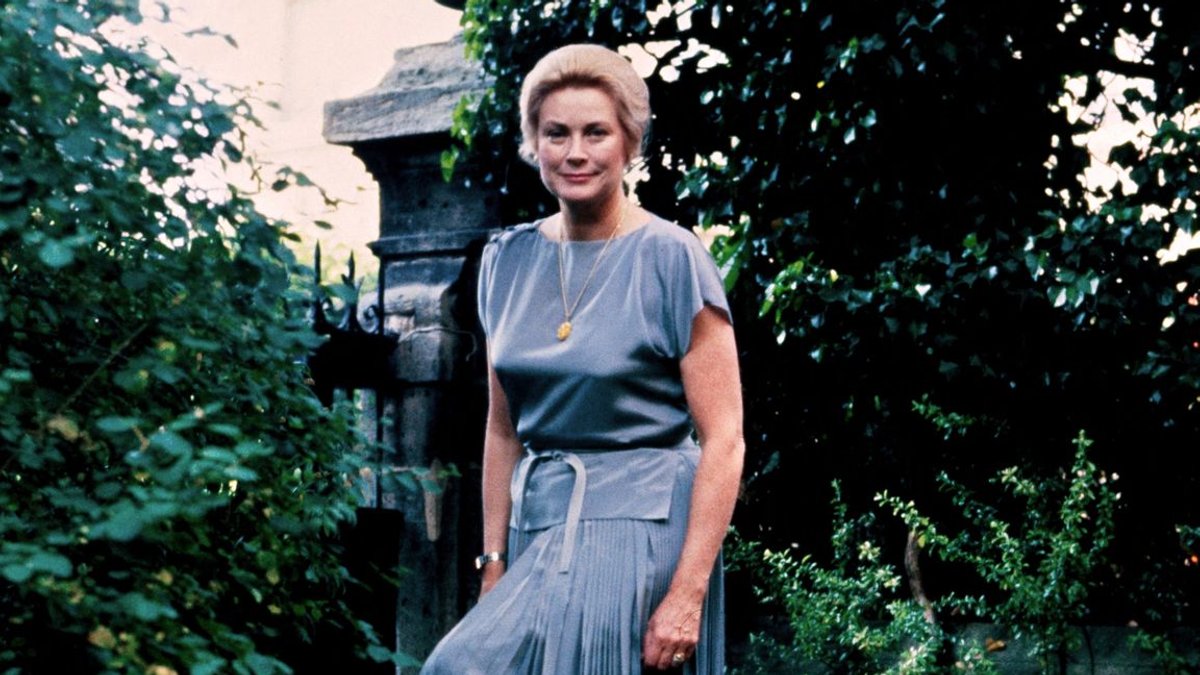
By the late 1950s, Kelly had also established homes in France and Switzerland. Family photographs from 1977 depict Rainier, their children, and Kelly in a more relaxed setting, away from the palace’s formality. Unlike the rigid protocol of Monte Carlo, these residences offered privacy, a retreat from the public eye. Images from 1981 show her surrounded by greenery, a stark contrast to the red carpets of her early career.
Private Retreats Beyond Palace Walls
Her final years reflected a delicate equilibrium between duty and personal fulfillment. By the early 1980s, she had fully integrated her role as a princess while preserving her American ties. Her death in a car crash near Monaco on September 14, 1982, concluded a life that had traversed continents and identities. The homes she had inhabited, from the Philadelphia mansion to the palace, stood as silent witnesses to her journey, each encapsulating a chapter of her existence.
Kelly’s domestic routine in Monaco differed markedly from her Hollywood years. Cooking became a daily practice, a way to regain autonomy over her time. A 1977 photograph from Switzerland shows her in the kitchen, surrounded by her children and husband, illustrating a more casual, family-oriented approach to food. Unlike the rigid meal schedules of her acting career, dictated by studio demands, these moments reflected a conscious shift toward privacy and domestic contentment.
Gardens and Cooking: New Passions Take Root
Gardening remained her most enduring passion, a hobby that extended across her residences in Monaco, Paris, and Philadelphia. In 1981, photographs captured her tending to plants with the same dedication she once applied to her film roles. The garden became her private retreat, a space to escape public attention. Even during visits to her childhood home, she was often seen among blooming plants, a visual sign of her deep connection with nature. The evolution from a life where every appearance was deliberate to one where she nurtured growth, both literal and personal, highlighted her transformation.
Family photographs from the 1960s and 1970s reveal a woman at ease in both extravagance and simplicity. In 1966, she is pictured in Ocean City, New Jersey, with her three children, Caroline, Albert, and Stephanie, lounging by the shore during a two-week vacation. The image offers a glimpse of leisure, untouched by the palace’s formality. A 1963 photo on the steps of her Philadelphia childhood home shows her waving to photographers with her husband and children, a gesture that bridged her past and present.