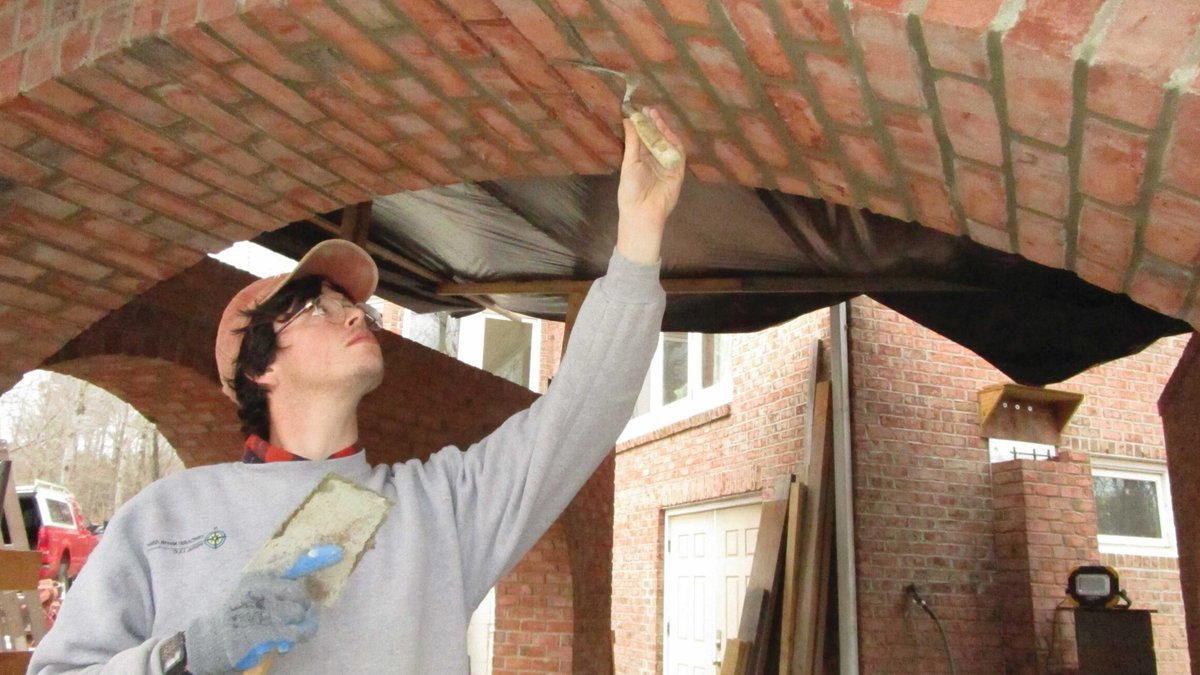
Masonry mortar is often misunderstood. One reason is the mystique surrounding masonry itself.
In reality, masonry is an industry guided by engineers, architects, and building scientists. Their research shapes building codes and contract specifications.
The Ancient Roots of Lime Mortar
Lime mortar has been a cornerstone of masonry for millennia. Its origins are unknown, but evidence of lime production dates back to at least 2450 BC in present-day Iraq.
Lime is made by heating limestone to 1,650°F, removing carbon dioxide and leaving calcium oxide (quicklime). This quicklime is soaked in water for weeks, becoming lime putty.
Mixed with sand (1 part lime to 3 parts sand), lime putty built ancient wonders like the Great Wall of China and medieval European cathedrals. It was also used in North American landmarks like Mount Vernon and Monticello.
Read Also: Massachusetts study finds embodied carbon rivals operational emissions in new
Thomas Jefferson, for instance, purchased land near Monticello specifically for its limestone deposits, ensuring a steady supply of mortar for the half-million bricks needed for construction.
Lime remains a key ingredient in mortar worldwide. A significant development in the 1930s was the introduction of hydrated lime, a powdered form that eliminates the need for on-site slaking (soaking) of quicklime.
Unlike lime, the invention of Portland cement is well-documented. In 1824, English mason Joseph Aspdin patented a cement named for its resemblance to Portland stone, a building material from the Isle of Portland.
Made from limestone, clay, and other minerals, Portland cement is fired in a kiln, ground into powder, and mixed with gypsum to control setting time.
For nearly 50 years after Aspdin’s patent, Portland cement was scarce and expensive in the US, imported from Europe. This changed in 1871 when David O. Sayler began manufacturing it in Pennsylvania, leading to its widespread adoption.
Read Also: New roof codes require double insulation layers to block condensation
Masons gradually increased Portland cement’s proportion in their mixes. By 1900, a common recipe was 1 part Portland cement, 1 part lime putty, and 6 parts sand, still used today.
The combination of Portland cement and lime creates a product that is superior to either one by itself. Lime/sand mortar is soft and easy to work with, retaining water for a long period, which increases the time it can be used after being mixed and helps it cure properly. On the downside, mortar made with lime and sand is low in compressive strength and limits the speed of production. Portland cement/sand mortar is stiff and difficult to work with, dries and cures quickly, but often dries out too quickly, negatively affecting the bond.
There are several exceptions to the general use of Portland cement in mortars. Refractory mortars, which have no Portland cement, are used in and around fireplaces, chimneys, furnaces, and boilers. Epoxy mortars, sometimes used in tile work, also have no Portland cement. Clay has been a poor man’s mortar for centuries and is still used in basic shelters in poor countries. A mortar made from hydrated lime mixed with sand is often used on historic buildings.
In conclusion, masonry mortar is a complex and varied material, with a long history and many different types and applications, all of which are guided by industry standards and specifications.