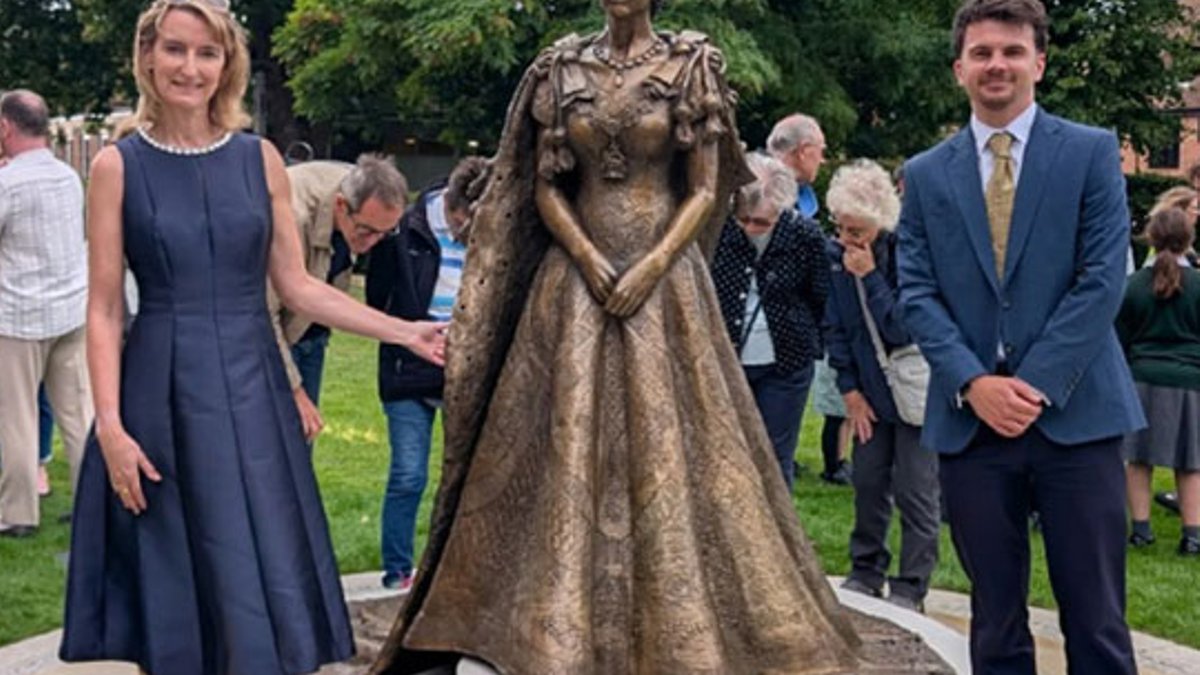
Amy Goodman’s Queen Elizabeth II “Sister Queens” sculptures in the Hampshire towns of Andover and Romsey feature bespoke cast stone plinths manufactured by Haddonstone. The plinths were designed to complement the sculptures and respond to the surrounding architecture.
According to the artist, Haddonstone was chosen for its combination of craftsmanship, technical knowledge, and flexibility. The company’s cast stone allowed for the achievement of the desired appearance and quality, while also enabling the creation of bespoke elements specifically proportioned to each sculpture.
The collaborative process between Goodman and Haddonstone was essential in translating the design into a manufacturable and installable product. The company’s technical expertise was invaluable in resolving practical considerations such as dimensions, weight, fabrication, and installation.
Design Considerations
The scale and proportions of the plinths were carefully considered to ensure that the sculptures felt integrated into their surroundings. In Andover, the curved form of the plinth responded to the existing circular paving, while in Romsey, the circular steps and lower cast stone tier followed the sweep of the Queen’s Coronation robe.
The positioning of the sculpture in Romsey was also significant, with the Queen walking towards the main door of the Abbey and standing adjacent to the doorway she used on several visits. The plinths were designed to feel refined and permanent, with a high standard of finish and attention to detail.
Goodman emphasized the importance of the plinth in the overall success of a public sculpture, stating that it forms the transition between the sculpture and its setting. The plinth must support the work physically and feel visually resolved and proportionate.
Collaboration and Craftsmanship
Haddonstone’s adaptability and willingness to respond to the evolving project were impressive, particularly in the case of the Romsey Queen, where the footprint of the plinth was larger than that of the Andover sculpture. The company proposed casting the lower tier in four separate sections, which proved to be an effective solution.
The finished result was seamless, with Haddonstone supplying the appropriate mortar system and stonemason Colin Evans Fixings bringing everything together on site. Goodman was impressed by Haddonstone’s technical precision in translating the design into the finished cast stone, which was extremely accurate and of high quality.
Related Post: King Living Design Focuses on Comfort and Modern Living
Haddonstone’s cast stone was particularly suitable for these prestigious public commissions due to its durability and high-quality finish. The company’s extensive portfolio of architectural and public projects also spoke to its expertise and capabilities.
As the project demonstrates, effective collaboration between artist and manufacturer can enhance the success of public art. Through close partnership with Goodman and the wider project team, Haddonstone’s bespoke cast stone plinths provide a fitting architectural foundation for the landmark sculptures.
The sculptures’ plinths were designed to anchor them within their surroundings, ensuring their lasting presence for generations to come. With their elegant and understated design, the plinths help the sculptures feel as though they truly belong in their locations, rather than simply being placed there.
Goodman’s advice to architects, environment designers, and artists considering public sculpture projects is to consider the plinth from the earliest stages of the design, rather than treating it as an afterthought. The scale, material, and relationship to the sculpture and setting are all essential, and allowing plenty of lead time is essential for good design, manufacture, and installation.
Haddonstone’s work on the “Sister Queens” sculptures highlights the importance of selecting the right plinth and partner manufacturer for public art projects. By working closely with the artist and project team, the company was able to create bespoke cast stone plinths that enhance the overall impact and presence of the sculptures.
The result is two landmark sculptures that celebrate Britain’s longest-reigning monarch, with plinths that feel refined, permanent, and harmonious within their surroundings.
The Queen Elizabeth II “Sister Queens” sculptures are now installed in their respective locations, with the plinths providing a fitting foundation for the sculptures. The sculptures are expected to remain in place for generations to come, serving as a lasting tribute to the monarch and a result of effective collaboration between artist and manufacturer.
Effective Collaboration
The project demonstrates the importance of selecting the right plinth and partner manufacturer for public art projects.